
-
AboutTRK TECHNOLOGY (HUI ZHOU) CO.,LTD. established in Bao'an District, Shenzhen in 1998.

-
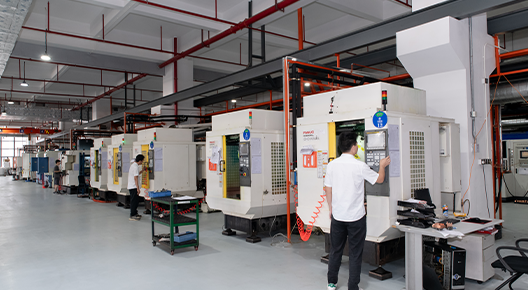
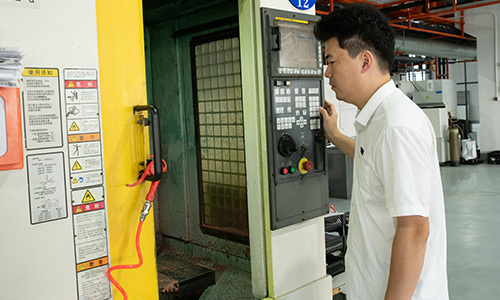
StrengthThe factory has a total of 77 injection molding machines, including 35 Haitian two-color injection molding machines, 8 two-color liquid injection molding machines, 15 Sumitomo high-speed machines, 6 Fanuc high-speed machines, and 13 ordinary single-color injection molding machines. Mold processing uses Mikron CNC machining centers, Fanuc CNCs, Charmilles mirror EDM, Makino mirror EDM, Charmilles slow wire EDM, Hexagon three-coordinate measuring machines, and other mold manufacturing equipment; and has a 380-meter three-spray three-bake dust-free automatic spraying line.
-
ProductThe company's business scope covers: instruments and meters, tools, industrial and outdoor three-proof products, two-color liquid silicone products, consumer electronics, smart home products, medical products, automotive plastic interior parts, etc. The company provides mold design, manufacturing, production, assembly, spraying, screen printing, ultrasonic processing, etc. for these products.
-
ContactThank you for visiting the official website of Jingying Lun Innovation Technology. If you have any cooperation intentions or suggestions, please contact us through the following methods. We will reply to you as soon as possible. Thank you!



17
2024
-
12
What are the design specifications for injection mold drawings?
Author:
1 Subject Matter and Scope
This standard specifies the content and expression standards that should be expressed in product drawings, which helps to improve the quality of die drawings and better guide production. This standard applies to the design of product drawings for die design in the product development department of this company.
1 Subject Content and Scope of Application
This standard specifies the content and expression standards that should be expressed in product drawings, which helps to improve the quality of mold drawings and makes them better guide production. This standard applies to the design of product drawings of molds designed by the product development department of this company.
2 Content
2.1 2D Drawings
2.1.1 2D drawings must comply with national standards for mechanical drawing.
2.1.2 Use PRO/E software to generate 2D drawings, and the file configuration content should be unified.
2.1.3 The line width, font size, and lines of the drawings should be unified. The line width of thick solid lines and thick dashed lines is 0.5mm, and the line width of thin solid lines, wavy lines, double-fold lines, thin dashed lines, and double-dashed lines is 1/3 of the thick solid line. The width of the dashed line is 1/3 of the thick solid line, the segment length is 4mm, and the segment interval is 1mm. The font height (numbers, text) is 3.5mm, and the line width is 0.35mm.
2.1.4 The drawing scale is in accordance with national standards, and the actual scale of the printed drawings should be consistent with the scale indicated in the title block, and scaling is not allowed. The drawing scale should be reasonably selected according to the size and complexity of the product structure. Views should not be too small, and the structure should be clearly expressed. Dimension lines should not be too dense and difficult to identify.
2.1.5 Dimension annotation on drawings:
2.1.5.1 The product datum should be indicated in the drawing, and the dimensions should be annotated with a unified datum.
2.1.5.2 The drawings should have complete, correct, clear, and reasonable dimensions, without missing dimensions, and the dimension lines should be reasonably distributed. The dimension annotation should facilitate mold processing.
2.1.5.3 Important assembly dimensions and important parts, positioning dimensions, and inspection dimensions should be annotated with tolerances. Other dimensions are annotated without tolerance grades.
2.1.5.4 Inspection dimensions are key dimensions for product assembly and appearance. Inspection dimensions should be added with serial numbers, and the serial number format is a number plus a circle. The serial numbers should be arranged in order, from left to right, and from top to bottom, for easy reference.
2.1.5.5 The maximum overall dimensions of three-dimensional curved surfaces that are difficult to annotate should be indicated.
2.1.6 The dimensions of the large and small ends of the reinforcing ribs must be indicated, and when annotating dimensions of parts with slopes, it must be clearly expressed whether the annotated dimension is the large end or the small end.
2.1.7 The drawing expression is clear and concise, and unnecessary circular arc tangent lines are removed.
2.1.8 The technical requirements should include: un-annotated wall thickness, un-annotated fillet radius, un-annotated demolding slope, appearance requirements (such as mirror surface, transparent parts, spraying, etching, etc.), assembly relationship and clearance, inspection dimensions, and other special requirements.
2.1.9 The area or range of the appearance that needs to be textured should be indicated with a dashed line.
2.1.10 The position of the appearance surface should be indicated with a thick double-dashed line in the drawing of the appearance part.
2.1.11 The position of the parting surface should be indicated with a thin solid line in the 2D drawing and explained with text.
2.1.12 The position where the gate is not allowed to be set and the position where the ejection mark is not allowed should be indicated in the drawing.
2.1.13 If the demolding direction is inconsistent with the product assembly direction, the drawing is generally drawn according to the product demolding direction. The product assembly direction and datum should be indicated with arrows on the drawing, and explained with text.
2.1.14 The status of the drawing should be indicated, and replacement drawings have special annotations.
2.1.15 The 2D drawing should be consistent with the 3D drawing. When the 3D drawing is changed, the 2D drawing should be updated synchronously.
2.1.16 In order to facilitate drawing recognition, a three-dimensional axonometric drawing is added to the 2D drawing at an appropriate position.
3.1 3D Solid Model
3.1.1 All structures in the 3D solid model should be expressed using solids, and no structures should be missing or inconsistent with the 2D drawing.
3.1.2 The inner and outer surfaces of the product perpendicular to the demolding direction and the slider and core pulling direction on the 3D drawing should be added with a demolding slope, and the slope size should be preferably 0.5°~1º. Before adding the slope, the position of each parting surface of the product and the assembly and appearance requirements of the product should be clarified to determine the direction and size of the slope. The position that needs to be inserted should be added with a slope of 1º to 3º. The larger the slope, the better, if allowed. The reinforcing ribs should ensure strength. Usually, the mold design task book is proposed by the structural designer and the mold designer based on the task book of the molded plastic product. The mold designer designs the mold based on the task book of the molded plastic product and the mold design task book.
3.2 Collection, Analysis, and Digestion of Original Data
Collect and organize relevant data on part design, molding process, molding equipment, mechanical processing, and special processing for use in mold design.
⑴ Digest the plastic part drawing, understand the purpose of the part, analyze the processability, dimensional accuracy, and other technical requirements of the plastic part. For example, what are the requirements of the plastic part in terms of surface shape, color transparency, and use performance, whether the geometric structure, slope, inserts, etc. of the plastic part are reasonable, the allowable degree of molding defects such as weld lines and shrinkage, and whether there are post-processing such as painting, plating, bonding, and drilling. Select the dimension with the highest dimensional accuracy of the plastic part for analysis, and see if the estimated molding tolerance is lower than the tolerance of the plastic product part, and whether a plastic product part that meets the requirements can be molded. In addition, it is also necessary to understand the plasticization and molding process parameters of the plastic.
⑵ Digest process data, analyze whether the molding method, equipment model, material specifications, mold structure type, and other requirements proposed in the process task book are appropriate and can be implemented. The molding material should meet the strength requirements of the plastic part and have good fluidity, uniformity, isotropy, and thermal stability. According to the purpose of the plastic part, the molding material should meet the conditions of dyeing, metal plating, decorative performance, necessary elasticity and plasticity, transparency or the opposite reflection performance, bonding or weldability, etc.
III. Selection of Molding Equipment
Molds are made according to the type of molding equipment, so it is necessary to be familiar with the performance, specifications, and characteristics of various molding equipment. For example, for injection molding machines, the following information should be understood in terms of specifications: injection volume, clamping pressure, injection pressure, mold mounting dimensions, ejection device and dimensions, nozzle hole diameter and nozzle spherical radius, sprue bushing locating ring dimensions, maximum and minimum mold thickness, template stroke, etc., see relevant parameters. It is necessary to preliminarily estimate the external dimensions of the mold and determine whether the mold can be installed and used on the selected injection molding machine.
IV. Specific Structural Scheme:
⑴ Determine the mold type, i.e., injection mold, etc.
⑵ Determine the main structural selection of the mold type. The ideal cavity number, under absolutely feasible conditions, allows the mold itself to meet the process technology and economic requirements of the plastic part. The process technology requirements for plastic parts are to ensure the geometric shape, surface finish, and dimensional accuracy of the plastic parts. The economic requirements of production are to reduce the cost of plastic parts, increase production efficiency, allow the mold to work continuously, have a long service life, and save labor.
Many factors influence the mold structure and individual mold systems; it is very complex:
① Cavity arrangement. Determine the number and arrangement of cavities based on the geometric structure characteristics of the plastic part, dimensional accuracy requirements, batch size, mold manufacturing difficulty, mold cost, etc. For injection molds, for plastic parts with grade 3 and 3a accuracy and a weight of 5 grams, using a hardened casting system, the number of cavities is 4-6; for plastic parts with general accuracy (grade 4-5), and the molding material is a locally crystalline material, the number of cavities can be 16-20; for plastic parts weighing 12-16 grams, the number of cavities is 8-12; while for plastic parts weighing 50-100 grams, the number of cavities is 4-8. For amorphous plastic parts, the recommended number of cavities is 24-48, 16-32, and 6-10. When the weight of the plastic part is further increased, multi-cavity molds are rarely used. For plastic parts with 7-9 grade accuracy, the maximum number of cavities is increased by 50% compared to the indicated 4-5 grade accuracy plastic parts.
② Determine the parting line. The position of the parting line should be conducive to mold processing, venting, demolding, molding operations, and the surface quality of the plastic parts.
③ Determine the gating system (shape, position, and size of the main runner, branch runner, and gate) and venting system (venting method, position and size of the vent groove).
④ Select the ejection method (ejector pins, ejector sleeves, push plates, combined ejection), and determine the method of handling the side recesses and core pulling.
⑤ Determine the cooling and heating methods and the shape, position of the heating and cooling grooves, and the installation location of the heating elements.
⑥ Based on the mold material, strength calculation, or empirical data, determine the thickness and external dimensions of the mold parts, the external structure, and the position of all connecting, positioning, and guiding parts.
⑦ Determine the structure of the main molding parts and structural parts.
⑧ Consider the strength of each part of the mold and calculate the working dimensions of the molding parts. If the above problems are solved, the structural form of the mold will naturally be solved. At this time, a structural sketch of the mold should be drawn to prepare for formal drawing.
⑨ Mold drawing requirements should be drawn according to national drawing standards, but also require combining the factory standards and factory customary methods not stipulated by the state. Before drawing the mold assembly drawing, process drawings should be drawn, and they must meet the requirements of the part drawing and process data. Dimensions guaranteed by the next process should be marked on the drawing with the words "process dimensions". If, after molding, no other machining is performed except for burr removal, then the process drawing is exactly the same as the part drawing. It is best to mark the part number, name, material, material shrinkage rate, and drawing scale below the process drawing. Usually, the process drawing is drawn on the mold assembly drawing.
A. Drawing the overall assembly structure diagram
When drawing the assembly drawing, try to use a 1:1 scale. Start drawing from the cavity, and draw the main view and other views simultaneously. The mold assembly drawing should include the following content:
① Molding part structure
② Structure of the gating system and venting system.
③ Parting surface and mold parting method.
④ External structure and the position of all connecting parts, positioning, and guiding parts.
⑤ Mark the cavity height dimensions (not required, depending on the needs) and the overall dimensions of the mold.
⑥ Auxiliary tools (part removal and demolding tools, correction tools, etc.).
⑦ Number all parts in order and fill in the parts list.
⑧ Mark technical requirements and instructions for use.
B. Technical requirements for mold assembly drawings:
① Performance requirements for certain systems of the mold. For example, assembly requirements for the ejection system and slider core pulling structure.
② Requirements for mold assembly process. For example, the mating gap of the parting surface after mold assembly should not be greater than 0.05mm, the parallelism requirements of the upper and lower surfaces of the mold, and indicate the dimensions determined by the assembly and the requirements for these dimensions.
③ Mold usage and disassembly methods.
④ Requirements for anti-oxidation treatment, mold number, engraving, marking, oil seal, and storage.
⑤ Requirements for mold trial and inspection.
C. Drawing all part drawings. The order of drawing part drawings from the mold assembly drawing should be: inside first, then outside; complex first, then simple; molding parts first, then structural parts.
① Graphic requirements: Must be drawn to scale, allowing enlargement or reduction. Reasonable view selection, correct projection, proper arrangement. In order to make the processing patent number easy to understand and easy to assemble, the graphics should be as consistent as possible with the assembly drawing, and the graphics should be clear.
② Dimensional annotation requirements should be unified, concentrated, orderly, and complete. The order of dimensional annotation is: first mark the main part dimensions and demolding draft angles, then mark the mating dimensions, and then mark all dimensions. On non-main part drawings, mark the mating dimensions first, then mark all dimensions.
③ Surface roughness. Mark the most commonly used roughness in the upper right corner of the drawing, such as marking "other 3.2". Other roughness symbols are marked on the respective surfaces of the parts.
④Other content, such as part names, mold numbers, material grades, heat treatment and hardness requirements, surface treatment, drawing scale, machining accuracy of free dimensions, technical descriptions, etc., must be filled in correctly.
D. Proofreading and drawing review The content of self-proofreading is:
①The relationship between the mold and its parts and the plastic part drawings, whether the material, hardness, dimensional accuracy, and structure of the mold and mold parts meet the requirements of the plastic part drawings.
②Plastic parts: Whether the plastic flow, shrinkage, weld lines, cracks, and draft angles affect the requirements for the use performance, dimensional accuracy, and surface quality of the plastic parts. Whether there are any shortcomings in the pattern design, whether the processing is simple, and whether the selection of the shrinkage rate of the molding material is correct.
③Molding equipment: Whether the injection volume, injection pressure, and clamping force are sufficient, whether there are any problems with the mold installation, plastic product core, and demolding, and whether the nozzle of the injection machine and the sprue bushing are in correct contact.
④Mold structure:
a. Whether the parting surface position and fine machining accuracy meet the requirements, whether there will be overflow, and whether the plastic part can be guaranteed to remain on the side of the mold with the ejection device after opening the mold.
Will the plastic part remain on the side of the mold with the ejection device after opening the mold.
b. Whether the demolding method is correct, whether the size, position, and quantity of the ejector pins and push rods are appropriate, whether the push plate will be stuck by the core, and whether it will cause scratches on the molded parts.
c. Mold temperature control: Whether the power and quantity of the heaters and the flow path, size, and quantity of the cooling medium are appropriate.
d. Methods for processing the side recesses of plastic parts, whether the side recess ejection mechanism is appropriate, such as whether the slider and push rod in the inclined guide column core pulling mechanism interfere with each other.
e. Whether the position and size of the gating and venting systems are appropriate.
f. Design drawings
g. Whether the placement of each mold part on the assembly drawing is appropriate, whether it is clearly indicated, and whether there are any omissions.
h. Part number, name, production quantity, whether the part is internally manufactured or externally purchased, whether it is a standard part or a non-standard part, the matching accuracy of the parts, the correction processing and allowance at the high-precision dimensional locations of the molded plastic parts, and the material, heat treatment, surface treatment, and surface finishing degree of the mold parts are clearly marked and described.
⑤Parts main parts, molding parts working dimensions and matching dimensions. The dimensional figures should be correct and error-free, do not make the producer recalculate.
⑥Check the view positions of all part drawings and assembly drawings, whether the projections are correct, whether the drawing methods comply with the national drawing standards, and whether there are any missing dimensions.
⑦Check processing performance: (Whether the geometric structure, view drawing method, and dimension marking of all parts are conducive to processing)
⑧Recalculate the main working dimensions of auxiliary tools. In principle, the drawing reviewer should follow the self-proofreading items of the designer; however, emphasis should be placed on the structural principle, process performance, and operational safety. After review and signature. And reviewed by a technical personnel with manufacturing experience, co-signed, and checked the manufacturability before sending to the mold workshop.
Next
Latest news
2025-01-10
Factory space for rent at Jingyinglun Precision Manufacturing Industrial Park
In 2024, 100,000 square meters of self-built industrial parks were completed. To serve customers, 50 mu of land was purchased in Vietnam in 2023, and 5 factory buildings were built. The company has precision mold manufacturing workshops, injection molding manufacturing workshops (single-color, double-color, double-color liquid), dust-free spraying manufacturing workshops, assembly manufacturing workshops, office buildings, and employee dormitories.
2024-12-17
How to prevent mold from getting damp and oxidized during storage and maintenance?
Preventing moisture and oxidation is crucial during the storage and maintenance of plastic molds. Moisture and oxidation can cause surface corrosion, part rust, dimensional changes, and other issues, seriously impacting mold lifespan and production efficiency. To prevent these problems, a series of measures can be taken to protect the molds. This article will introduce how to prevent moisture and oxidation during the storage and maintenance of plastic molds, and provide some commonly used control methods and optimization strategies.
2024-12-17
How do injection molding manufacturers handle product packaging and shipping arrangements?
Injection molding manufacturers need to consider several factors when handling product packaging and transportation arrangements, including product characteristics, transportation distance, mode of transportation, transportation time, and transportation costs. Effective packaging and transportation arrangements can protect the integrity and quality of the products and ensure that the products are safely delivered to customers. The following are some suggestions to help injection molding manufacturers handle product packaging and transportation arrangements.
2024-12-17
What are the design specifications for injection mold drawings?
1 Subject Matter and Scope This standard specifies the content and expression standards that should be expressed in product drawings, which helps to improve the quality of die drawings and better guide production. This standard applies to the design of product drawings for die design in the product development department of this company.
Contact
Address: No. 1, Xingshang Road, Yuanzhou Town, Boluo County, Huizhou City, Guangdong Province
Telephone:186 6491 1228
WeChat:137 1395 5426
Email:scb004@sztrk.com

© 2025 TRK Technology (Huizhou) Co., Ltd. All rights reserved
Business license
SEO Privacy Policy Website By: 300.cn